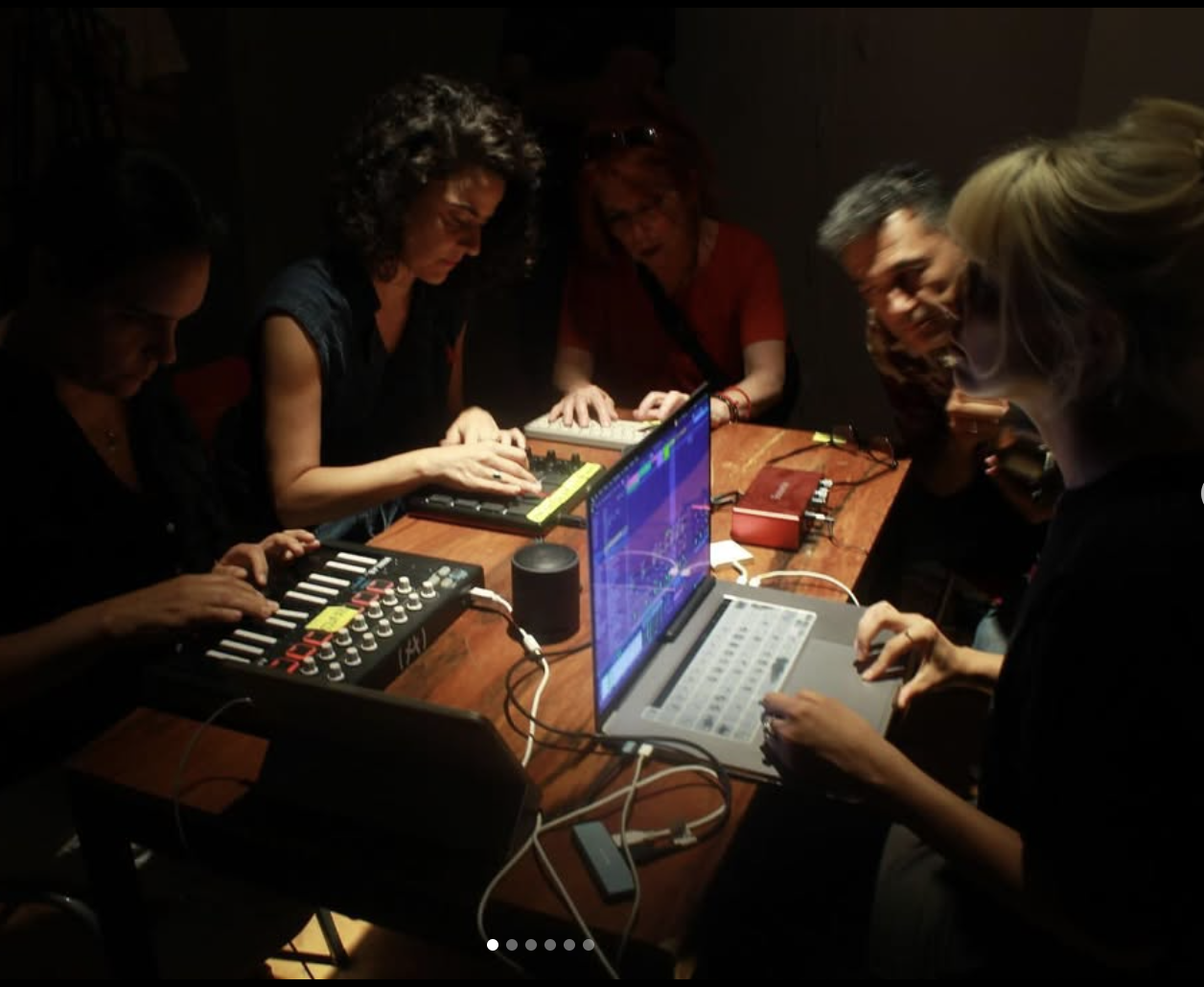
Type: Live arts performance
Direction: María Catalina Jorquera
Choreographic design: Mario Carreño
Production: Proyecto Nuclio
Chucao: Sensitive Interface Biome is a live arts performance that proposes a relational ecosystem in real-time. Two performers — an actress/musician digital systems operator and a dancer specialized in popular dances — inhabit a sonic environment governed by a harmonic scale derived from the spectral analysis of the song of the Chucao (Scelorchilus rubecula), a bird endemic to the austral forests of Chile. The piece operates as a triadic system where the human (performers), the computational (digital audio software, generative music with AI), and the non-human (the memory of the bird's song) coexist.
We understand this 'Biome' not only as an ecological category, but as a structure of interdependencies where the technological, the human, and the memory of the bird coexist and mutually transform each other, just as occurs in the ecosystems of Chilean Patagonia. The relationship between body and technology is structured as a feedback loop: the body activates the system through controllers, the generative system responds with sonic material, and that sonic material generates a new bodily reaction that again influences the system. It is a system of agencies in a loop where the dancer is the prime mover of the ecosystem and the music is the consequence of their physical decisions in space.
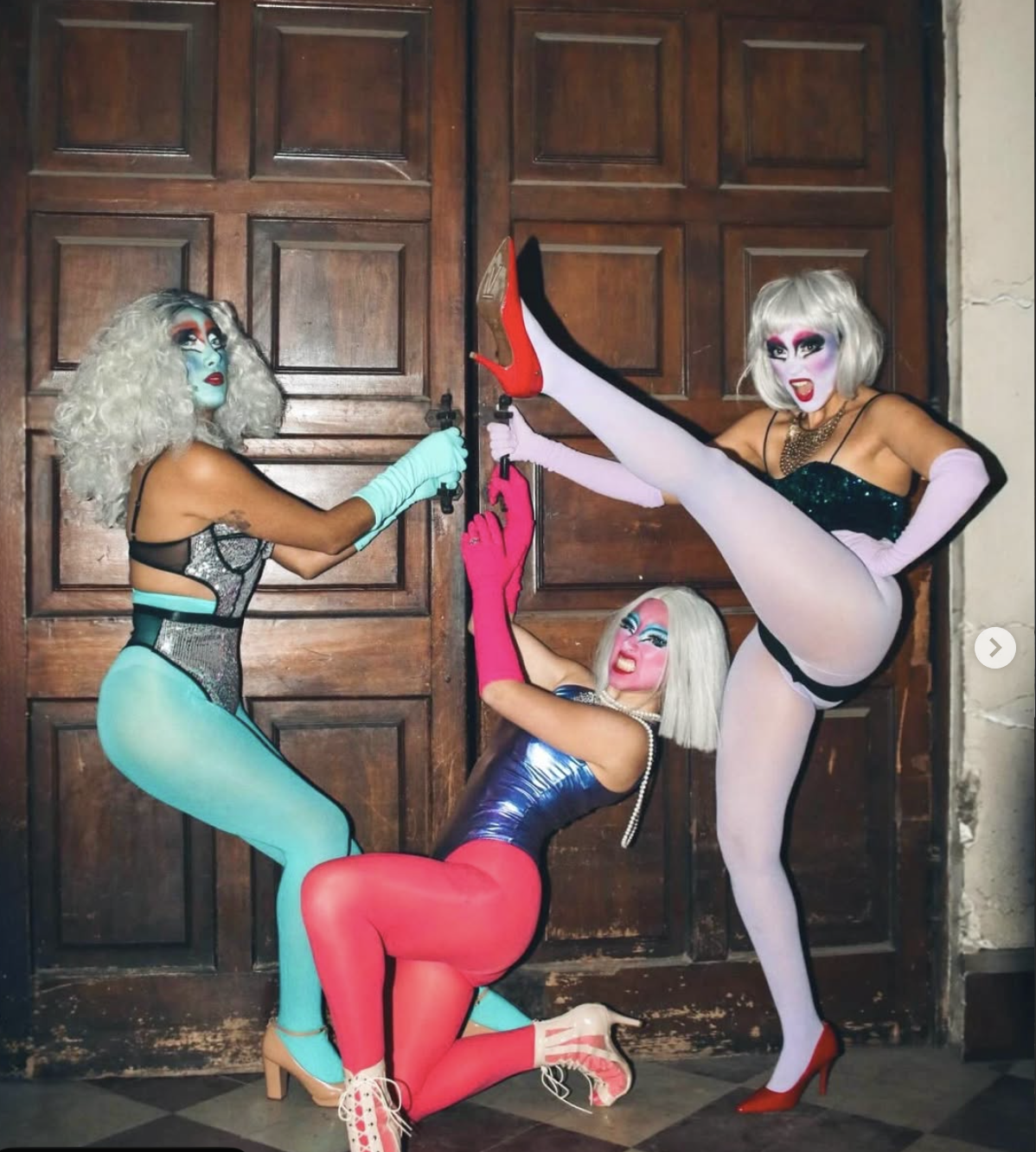
Type: Experimental cabaret collective
Direction: María Catalina Jorquera
Production: Proyecto Nuclio
Sicalípticas is an experimental cabaret collective that reclaims the archive of popular femininity through performance, fonomimicry, and music. Vedettes, chorus girls, and revue artists who sang, danced, performed, and seduced from the stage — women who shone until time condemned them to oblivion when their bodies ceased to serve the male gaze. Sicalípticas invokes these figures of low culture and brings them into the present with irony and irreverence. Through fonomimicry, iconic songs, acting, singing, original music, and classic scenes from film and television, this trio constructs a living archive of spectacularized femininity: its power, its discard, its revenge.
Type: Audio performance
Duration: 60 min
Format: Binaural sound + mobile audio devices
Location: Valparaíso, Chile
Direction and Music Production: María Catalina Jorquera
Choreography and DJ Set: Mario Carreño
Production: Proyecto Nuclio and Centex
Fiestología is a participatory audio performance designed as an immersive journey through public space. Guided by headphones, participants follow a sound score composed by the artist. The piece blends soundscapes, original music, elements of generative music, and poetic and choreographic prompts that spark a collective celebration in the city. The work highlights urban social dance — cumbia, salsa, house — as a form of memory and emotional resistance. Funded by the Extension Center of the Ministry of Cultures of Chile (Centex), Fiestología presents sound as a meeting technology and as a way of choreographed perception.
Type: Artistic residency and public intervention
Duration: 2 weeks (residency) + performative event
Format: Community workshops, procession, ritual performance
Location: Panimávida, Maule Region, Chile
Direction: María Catalina Jorquera
Choreographic design: Mario Carreño
Production: Proyecto Nuclio and Fundación Buenas Raíces
May Nightfall is a creative residency and community art intervention developed in Panimávida, a small town in Chile's Maule Region, centered on the traditional celebration of the Burning of the May Cross. Funded by the Ministry of Cultures, Arts and Heritage (PAOCC), the residency brought local residents together as dancers and performers in a procession that culminated in the ceremonial burning ritual. The project connected with the community through movement workshops and choreographic preparation, collaborating with local artistic groups such as the Tierra de Pumas drum ensemble and the organization CreemosPani. A documentary record of the creative process was produced and shared on digital platforms, showing the intersection between performance, popular festivity, and territorial ritual in rural Chile.
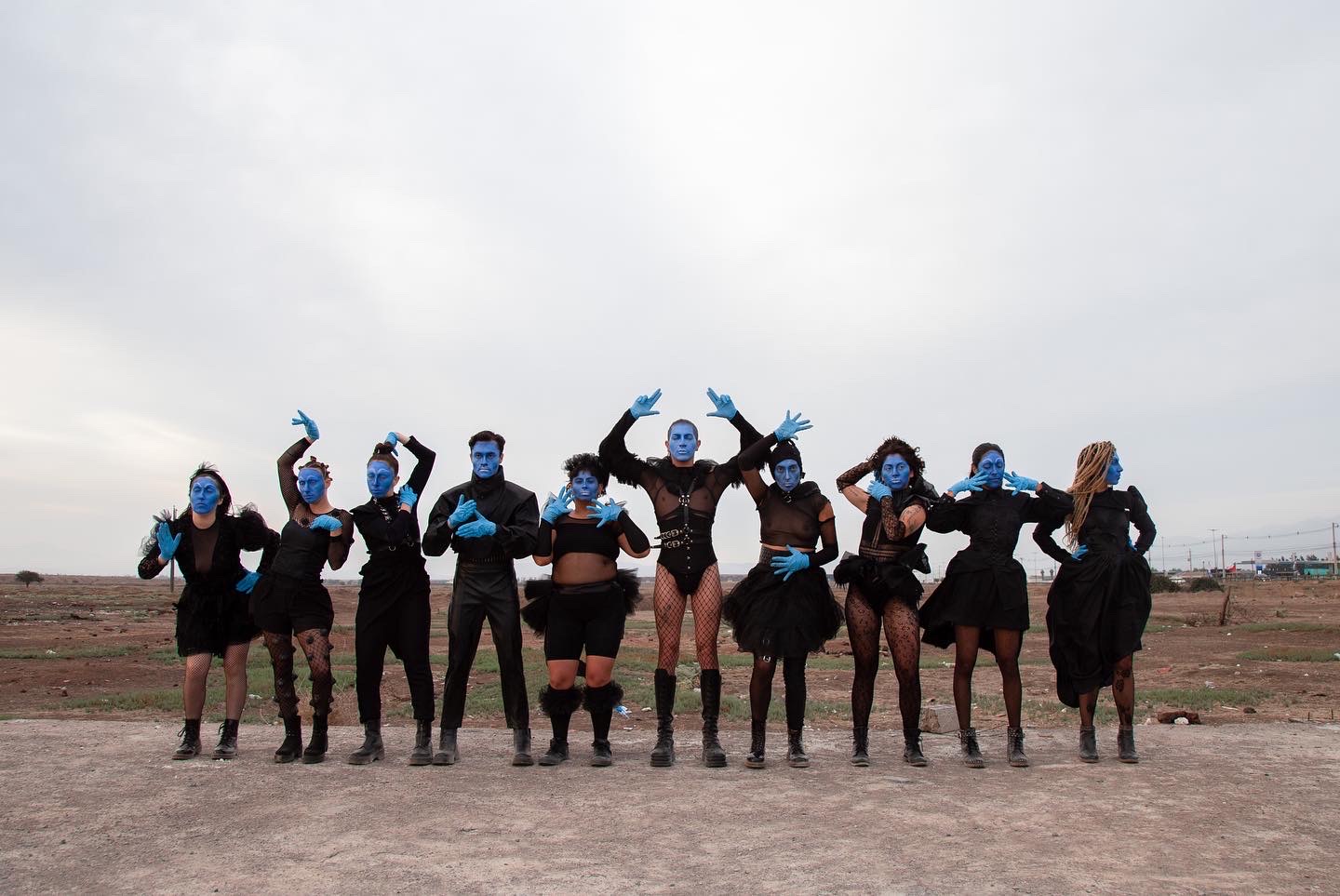
Type: Audio-guided urban walk
Duration: 45 min
Format: Portable sound system, audio track, and DJ set
Location: Santiago, Chile
Direction: María Catalina Jorquera
Choreographic Design: Mario Carreño
DJ Set: LoveShai
Production: Proyecto Nuclio
K-minata is a collective performance in which bodies move through the urban architecture of Santiago following a choreographed route, accompanied by live narration and a DJ set that constructs a soundscape in motion. Created for the Bienal de Artes Mediales de Santiago, the piece was conceived as an immersive and accessible experience, including live audio description for people with low vision. The work explores how the body generates knowledge about territory through movement and listening. In 2024, a new version was developed in the Recoleta neighborhood in collaboration with local residents.
Type: Short film / videodance
Duration: 10 min
Format: Digital video, HD
Location: Santiago, Chile
Direction: María Catalina Jorquera and Fernanda Gallardo
Choreographic Design: Mario Carreño
Original Music: Daniel Klauser
Co-production: Arboleda and Proyecto Nuclio
Mosquerío is a performative short film in which bodies become a swarm that inhabits the ruins of an abandoned coal plant on the outskirts of Santiago. Created during the social uprising in Chile, the piece explores how bodies gather, move, and transform within a decaying industrial structure, treating the site as both landscape and collaborator. The work was developed through collective improvisation and audiovisual recording with cameras and drones, producing a physical, erotic, and dystopian composition. The piece has been presented at Frame Rush Video Dance Festival (London, 2021), Postporn Film Festival (Warsaw, 2022), and La Ventana Interdisciplinary Short Film Festival (Chile, 2021).
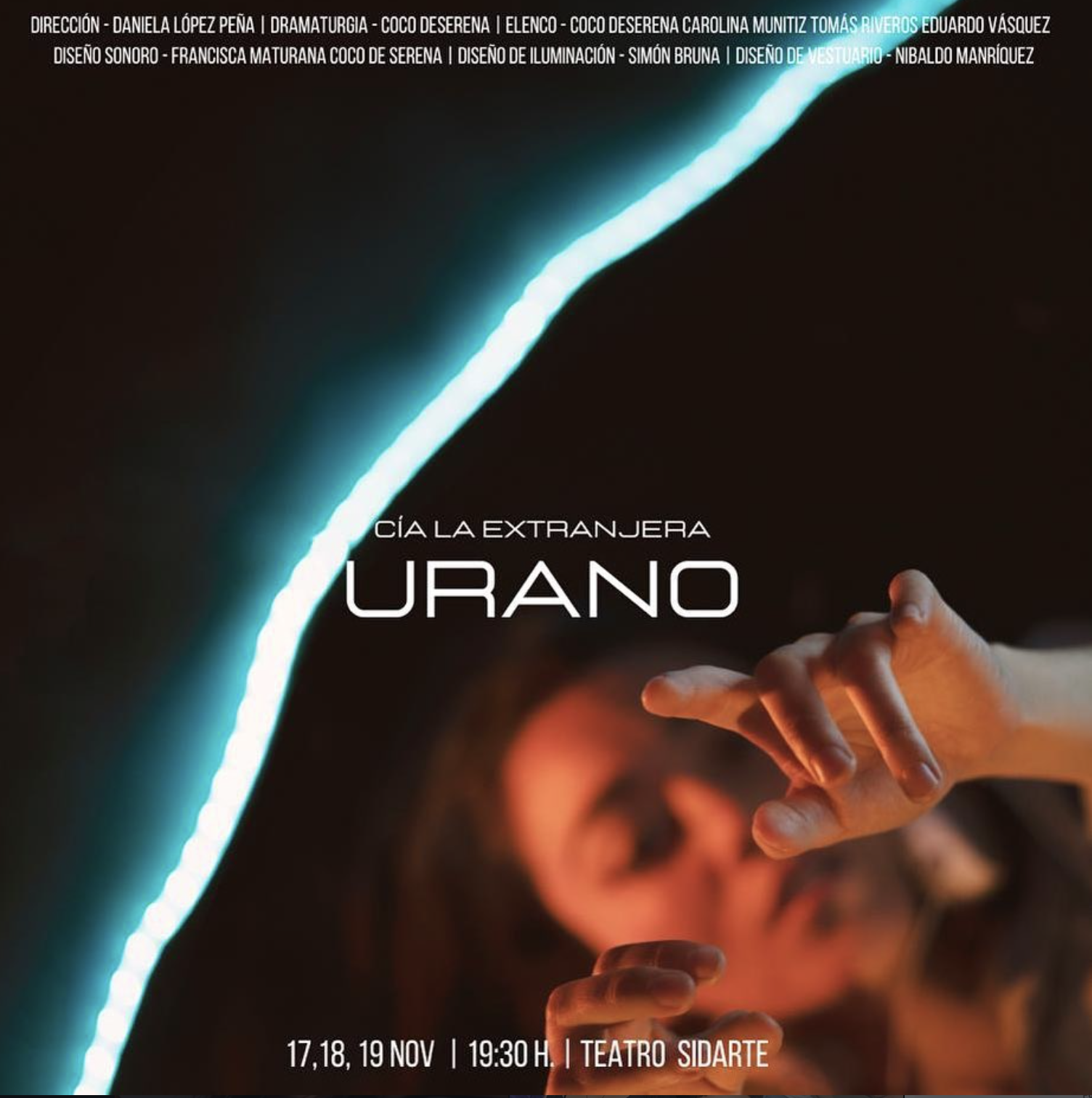
Type: Play
Duration: 60 min
Location: Teatro Sidarte, Santiago, Chile
Direction: Daniela López
Playwright: María Catalina Jorquera
Music: Francisca Maturana and María Catalina Jorquera
Cast: Eduardo Vásquez, Carolina Munitiz, Tomás Riveros, María Catalina Jorquera
Production: Cía La Extranjera
Urano is a play written by the artist, who was also part of the cast and composed segments of the original music. Selected for the International Playwriting Festival La Rebelión de las Voces (Santiago Off) and premiered at Teatro Sidarte, Santiago. Framed within speculative fiction, Urano proposes a journey from Earth to the planet Uranus as an act of rejecting normative terrestrial gender systems. With a fragmented structure, a science-fiction atmosphere, and a hybrid language blending manifesto, poetry, and narration, the play reflects on identity, gender, dissociation, and the desire for transformation. The staging incorporated live construction of antennas, electronic devices, vocal distortion, and a spatialized soundscape manipulated in real time by actors and sound technicians.